Technology
How VALIS makes robots work together.
VALIS doesn't build models. It organizes knowledge, agents and models — and orchestrates them reliably across real fleets. Here's how it works.
A knowledge graph that decides who does what
At the core is a living graph linking each robot's body schema, its skills, the agents and the models' capabilities. When a task arrives, the graph lights up along the path to the best choice: which robot, which agent, which model.
- Robots
- Skills
- Agents
- Models
Selected path:Mobile manipulator · Grasp & place · Manipulation · VLA
Agents that talk, and a network that heals
Agents hold an inner speech: they exchange messages, distribute across robots and coordinate in a decentralized way. If a node fails, the network reconfigures and the work continues. This is the hive-mind — a team of robots acting as one cognitive entity.
Agents negotiate a sub-goal; when a node drops, the mesh reroutes.
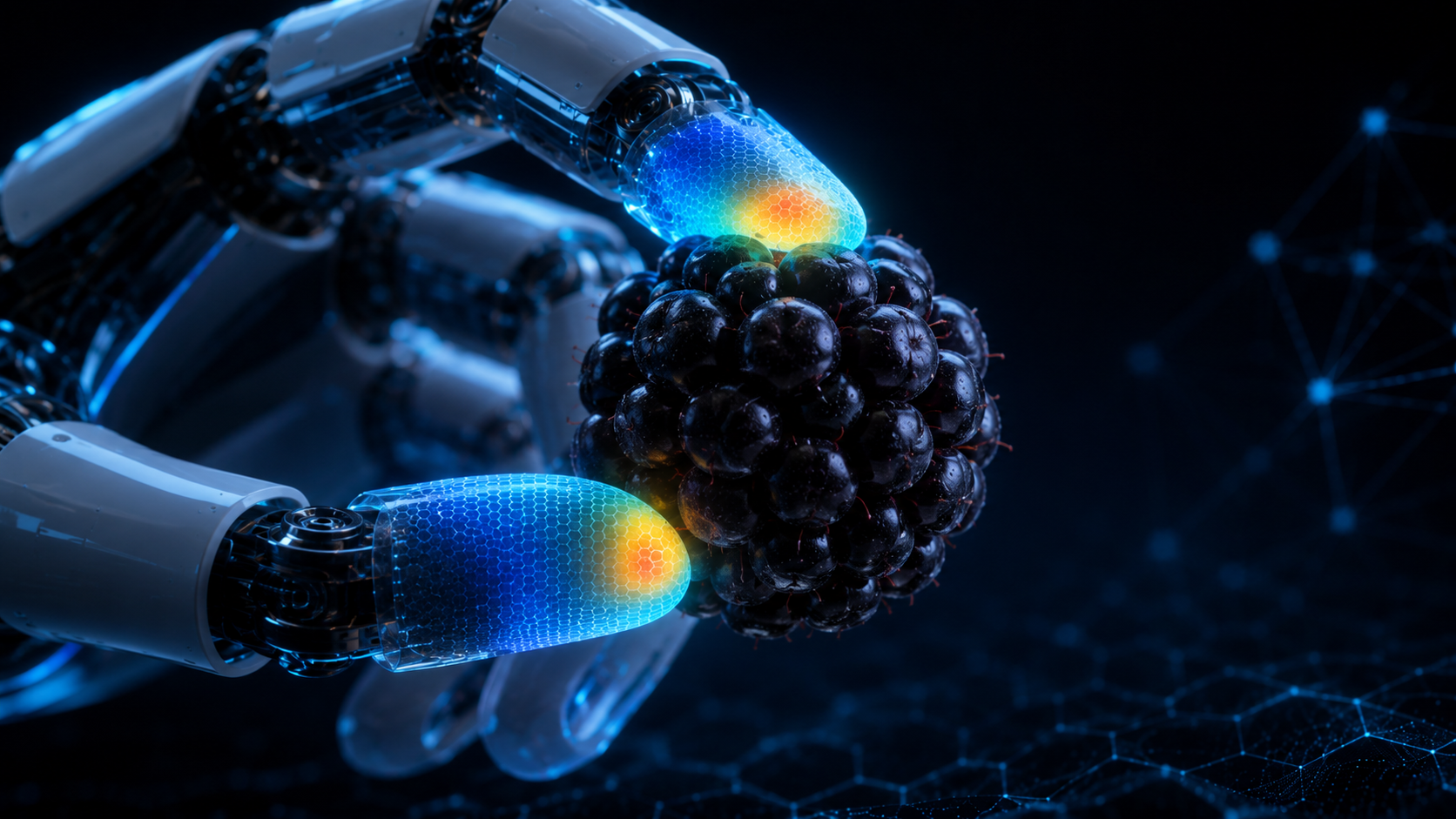
The best model for each task — including touch
Each agent picks the best available model: a VLA for manipulation, a navigation policy to move, another for perception. On contact tasks we integrate VLA+Touch models to modulate force and handle delicate objects.
Plans you can verify, not black boxes
Planning uses an established formalism — PDDL — boosted by LLMs in a neuro-symbolic approach: the LLM proposes, the formalism guarantees. The team has published exactly on this.
Why a formalism matters
Verifiable
Every plan is checked against the domain before it runs — no silent failures, no black box you have to trust.
Composable
Actions are reusable building blocks; a new task recombines skills the robot already has, instead of relearning from scratch.
Recoverable
When the world changes mid-task, the planner re-derives a valid plan rather than guessing — and you can see why.
Natural-language request
LLM emits symbolic tokens
(holding ?med)(at-robot room-4)(reachable resident)Verified PDDL plan
- 01
(pick-up medication) - 02
(navigate hall → room-4) - 03
(hand-over medication resident)

Proven in simulation, before the real world
Before deployment we train and validate in simulation: with tools like NVIDIA Isaac Sim / Isaac Lab we build a physically consistent digital twin of the scenario. The same simulator becomes a pre-sales 'what-if' tool.
Built on solid ground
On top of ROS
VALIS lives above ROS, the de-facto standard of robotics — not a closed silo.
Hardware & model agnostic
Agnostic to robot vendors and model providers. The right tool wins, never the lock-in.
Safety & security by design
Priorities, safety constraints and explainability are part of the architecture, not an afterthought.